Article
The founder who sells from zero
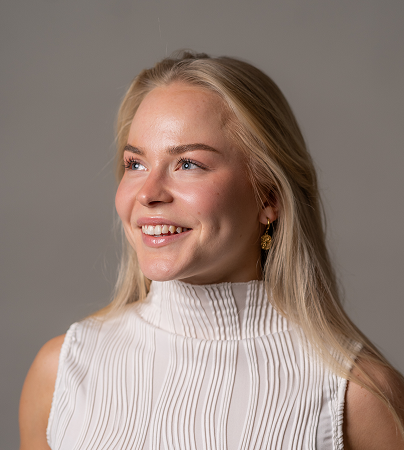
Rose Marie Rusanen
Venture Associate, Reaktor Ecosystem

In professional services, there's a common instinct when evaluating founders: look for experience, sector knowledge, credentials. The longer the track record and the more prestigious the previous employer, the stronger the signal.
Our research suggests this picture is incomplete, at best.

Over the past year, I studied early-stage success factors across more than 40 professional services ventures within the ecosystem, combining a quantitative founder survey with 11 in-depth interviews with founders and investors. One of the most consistent findings runs against the instinct to screen for background. Founder credentials, including years of consulting experience, prior management roles, and even previous entrepreneurship, showed no statistically significant association with venture performance in the early stages.
What did matter, repeatedly and emphatically across both data sources, was something harder to measure on a CV: entrepreneurial ownership mindset and hands-on sales capability.
The founder who acts versus the founder who waits
Investors in the study drew a sharp distinction between two types of founders. The first treats the venture as employment: something to navigate, to wait inside, to perform in. The second treats it as theirs: something to drive, to take ownership of, to pursue with the kind of hunger that creates momentum where none existed before. One investor described the clearest version of the failure pattern as founders who were:
“actively passively waiting for something to happen.”
The second type showed up differently. They knew the names of their first ten potential clients before they had a contract. They could describe their first three hires by name. When asked about traction, they didn’t describe a strategy; they described specific people they had already called.

Sales capability is a specific skill, not a personality type
The study is careful not to collapse sales capability into a personality trait. What the data describes is more specific: the ability to build a pipeline from nothing. To do cold outreach, convert conversations into deals, and develop references without the brand, the track record, or the team behind you that a larger firm provides.
In professional services, every transaction runs on trust. Clients trust the person more than any company. That means the founder’s ability to build relationships, earn credibility, and translate expertise into something a client will actually buy is what keeps the business alive in the early stages.
“You always sell a bit of a dream.”
Several participants in the study described early sales as selling a dream, or selling ambition. The ones who succeeded were specific enough about the dream that it became credible. The ones who struggled were often chasing a vision that hadn’t yet connected to a funded client budget.
“Hunter sales” capability, building pipeline from zero through cold outreach, came up consistently as the activating force. Domain expertise and networks support early selling, but those resources have to be converted into revenue by someone willing to initiate, follow up, and close.
Resilience is an operational requirement
One element of founder mindset that came through clearly in the interviews was resilience: not as a character virtue to celebrate, but as a practical requirement for survival. Early-stage ventures exist in conditions of genuine uncertainty. The ability to act decisively inside that uncertainty, to tolerate setbacks without becoming volatile, and to maintain momentum through the phases where nothing is working yet, distinguishes founders who reach the other side. One founder described the condition directly:
“It requires a certain kind of courage, and also accepting that you could fail.”

What this means in practice
Background matters. Expertise, credibility, and a starting network are real assets, and they give early-stage ventures a running start. But in this data, they don’t separate the high-performers from the rest. What differentiates is the hunger to build sales from zero, the mindset to take ownership rather than wait, and the psychological resilience to keep going through the hard months.
These qualities are behavioral, which means they show up in how people act rather than in what they’ve done before. They’re also buildable. The founders in this study who demonstrated them had developed ways of showing up, approaching setbacks, and staying in motion that had become second nature over time.
The early-stage signal is in the behavior. Background is just the starting point.
About the Author
Rose Marie Rusanen
Venture Associate, Reaktor Ecosystem